Contentful Alternative for Retail
Compare Amplience vs Contentful
Discover why retailers choose Amplience for high-volume product storytelling, unified DAM, and agentic AI workflows.
While Contentful remains a powerful general-purpose composable platform, many enterprise brands look for alternatives that reduce integration complexity and better support high-volume product storytelling. Choosing between Contentful and Amplience isn’t just a CMS decision. It’s a choice between a general-purpose content platform and a commerce-native agentic content supply chain.
Contentful is designed for broad digital standardization across diverse industries. Amplience is an AI-enhanced headless CMS and DAM built specifically for retailers who need to accelerate their supply chain, achieve omnichannel scale, and lower their total cost of ownership.
Contentful vs. Amplience: Which is Better for Retailers?
For global retailers, the choice between Contentful and Amplience is a choice between a generalist “one-size-fits-all“ architecture and a specialist commerce engine.
The Strategic Difference: Content Platform vs Content Supply Chain
The fundamental difference lies in the strategic focus. Contentful is designed to manage content pieces. Amplience is designed to manage the entire retail content supply chain.
Contentful: The Composable Generalist
While Contentful integrates with major commerce platforms, these connections often focus on data-linking rather than natively orchestrating complex retail workflows such as seasonal drops or multi-brand coordination. According to G2 reviews, users frequently report that complex data modeling that can lead to project delays and a heavy reliance on technical teams.
Amplience: The Content-First Model
Amplience allows teams to model complex product stories once and publish them everywhere. It combines a sophisticated visual interface for marketers with the high-scale API infrastructure that developers demand.
CMS Comparison: Content Modeling & Editorial Experience
Contentful
Contentful began as a developer-centric headless CMS and has since evolved into a broader composable content platform. While it is highly flexible for developers, it often requires technical intervention for marketing teams to build visual experiences. Because it serves industries ranging from banking to manufacturing to hopsitality, based on its current capabilities its roadmap lacks specific commerce depth. This generalist approach means native media automation and retail-specific connectors are often missing from the core platform.
Amplience
Amplience is a MACH-certified platform built from the ground up for modern commerce. By unifying content management and digital assets into a single high-performance stream, it removes the friction between creation and publishing. Amplience allows brands to decouple content from code, enabling teams to launch campaigns faster and reduce the complexity of expensive, multi-app workarounds.
Key advantages for retail:
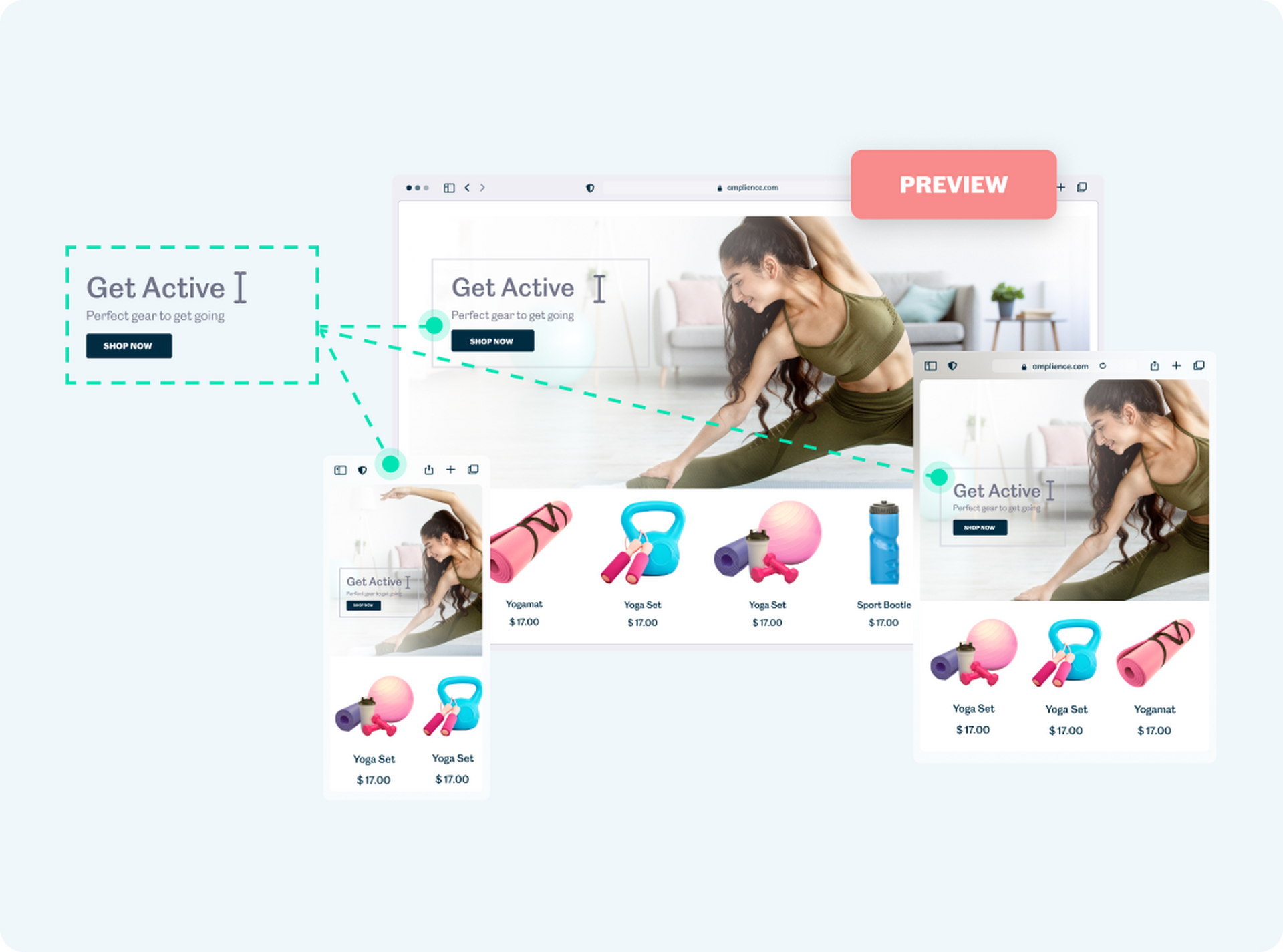
Visual control
Unlike many headless systems that feel like spreadsheets, Amplience offers robust previewing tools. Merchandisers can see exactly how content looks on mobile, tablet, or desktop before hitting publish.
Retail connectors
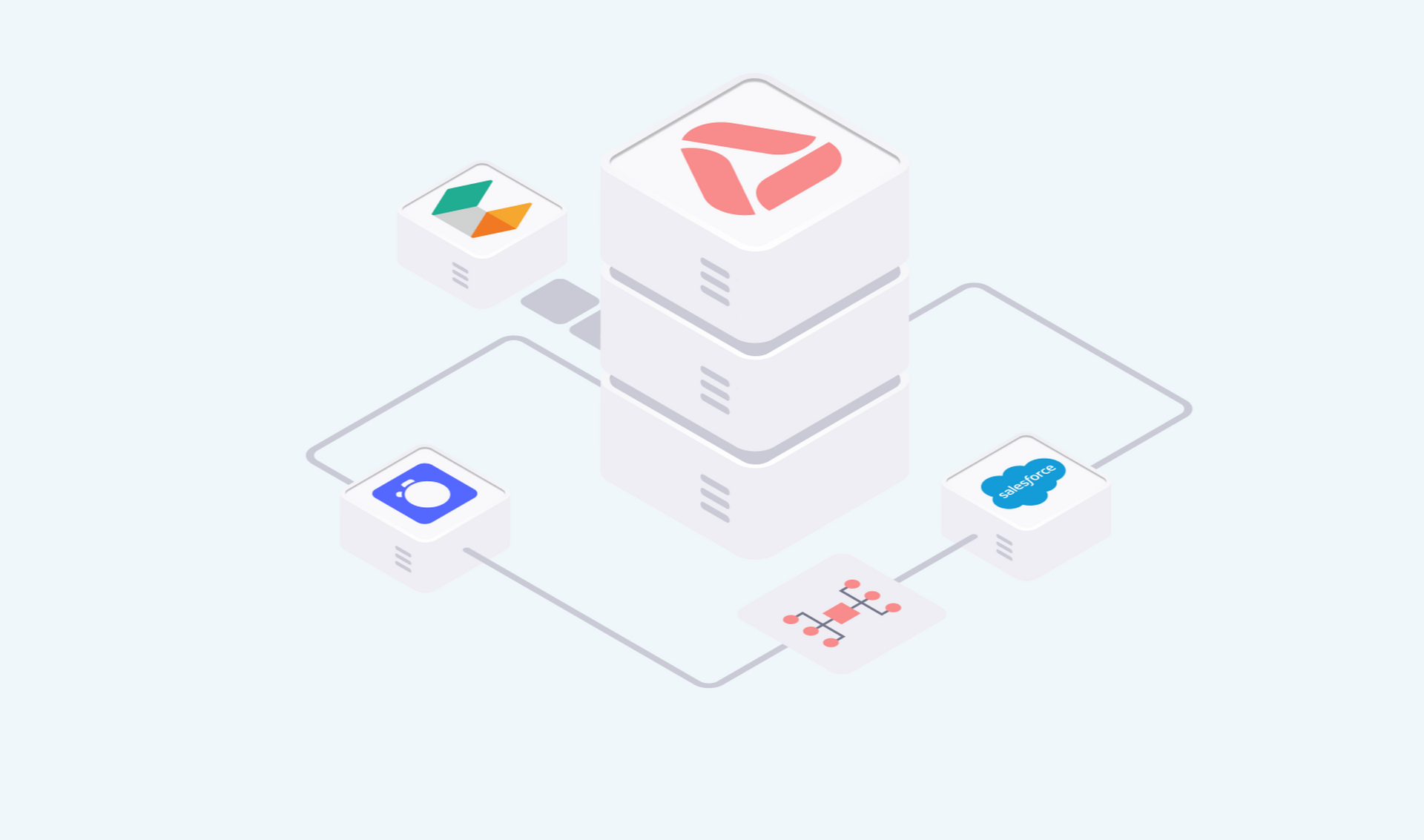
Amplience integrates natively with the commerce ecosystem, including Salesforce Commerce Cloud, commercetools, SAP, Shopify, and BigCommerce, focusing on workflow depth rather than just data linking.
Retail DAM & Dynamic Media: Management vs. Production
The Core Difference
Contentful provides built-in asset management and image APIs. However, many enterprise teams still find they must add specialized DAM or media automation tools to support complex retail workflows. Amplience unifies asset production and high-performance delivery into a single, automated stream.
Contentful: Asset Management
Contentful provides built-in asset management and image APIs for standard web requirements. However, many enterprise teams find they still require specialized media automation to support high-volume retail workflows and complex asset production, adding significant contract overhead and integration debt.
Amplience: Asset Production
Amplience doesn’t just store assets; it optimizes them. The platform combines the user-friendly DAM (Content Hub) with powerful CMS (Dynamic Content) services. You upload a single master asset, and the platform automatically handles background removal, swatch extraction, and focal point cropping for every channel.
Agentic AI: Automating Content Operations
Contentful: Assistant-Led Productivity
AI maturity is defined by how it is orchestrated. Contentful’s AI Actions are designed as assistive tools for the individual editor. They function as one-shot tasks where an editor must click a button to generate a meta description or translate a field. This human-initiated process often hits a ceiling at high operational volumes because it requires a person to trigger every individual action.
At enterprise scale, this approach can create bottlenecks. For example, translating a content item with 5 fields into 5 languages requires 25 separate manual AI actions.
Amplience: Event-Driven Orchestration
In contrast, Amplience Workforce introduces an agentic model designed specifically for commerce content workflows. This AI is event-driven. It reacts to the commerce lifecycle. Beyond single tasks, Workforce provides orchestration management for multiple, concurrent workflows.
With Amplience, that same 5-field, 5-language project is handled in a single, automated workflow. When a new SKU is added or an inventory change occurs, Workforce triggers autonomous AI agents to complete entire end-to-end workflows in the background.
A Workforce agent can autonomously:
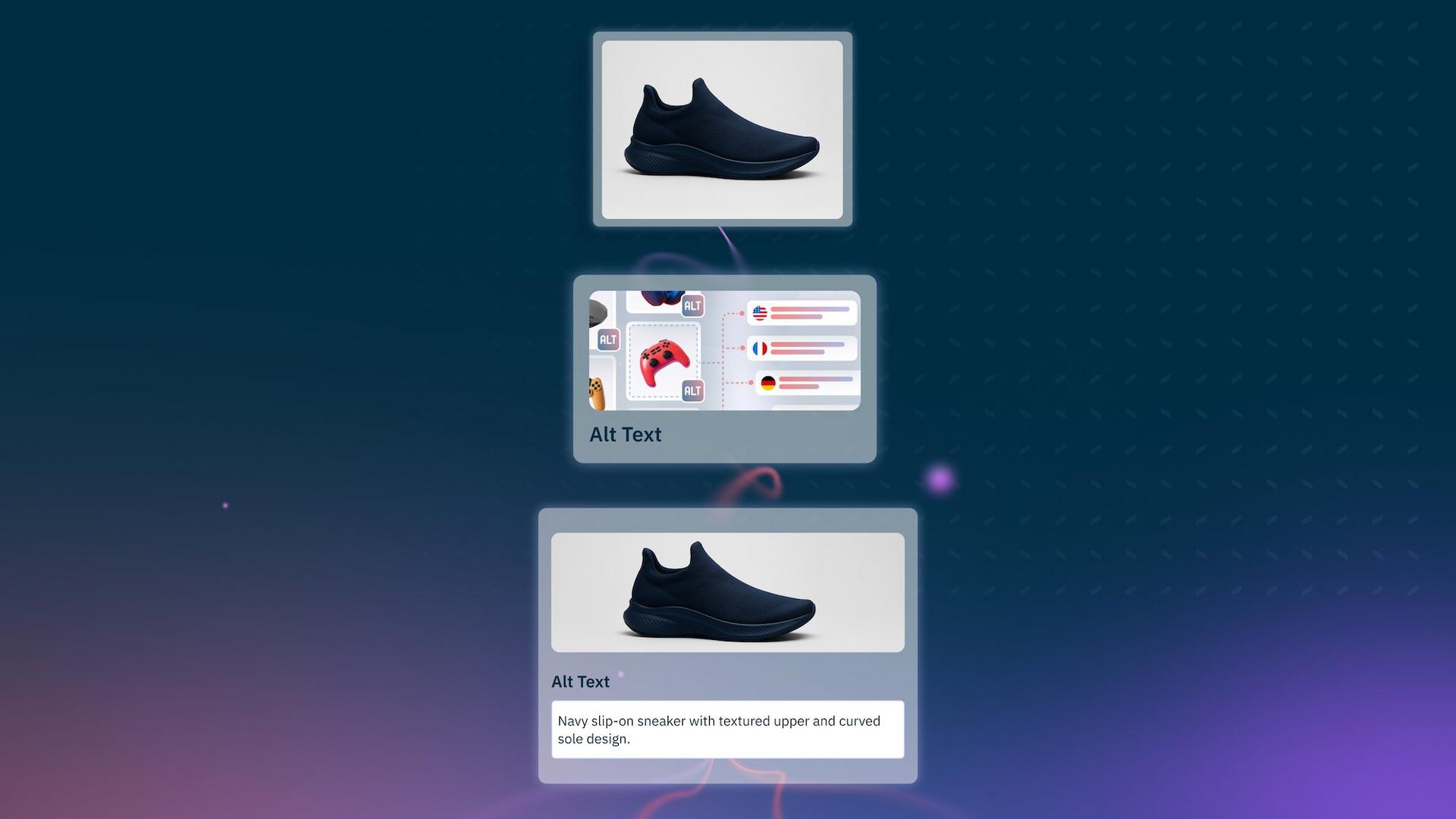
Analyze a raw product image: Automatically remove backgrounds, auto-crop for mobile, and extract swatches.
Orchestrate across fields: In one flow, it can generate SEO metadata, write brand-aligned copy, and localize it for every global market.
Connect the chain: Tag the asset for search and organize it within the DAM for immediate delivery across your commerce stack.
Manage parallel workstreams: Orchestrate multiple workflows at once, such as simultaneous brand launches or multi-market updates, ensuring consistency across every digital touchpoint without manual supervision.
While Contentful’s AI tools improve the way an editor works within the CMS, Amplience Workforce automates the way content and media are produced across the whole commerce organization. It is the difference between a smoother pen and a fully automated printing press.
Contentful vs. Amplience Feature Comparison
| Feature | Contentful | Amplience |
|---|---|---|
| Asset Management | Asset library and DAM apps | Built-in retail DAM |
| Visual Editing | Studio and form editing | Visual previews and scheduling |
| Commerce Integration | API and catalog integrations | Commerce-native orchestration |
| AI Model | Task-orientated productivity | Multi-workflow orchestration |
G2 Peer Reviews: What Users Say
While Contentful is a widely recognized CMS platform, verified user reviews on G2 highlight a clear distinction in long-term strategic value and ease of use for marketing teams.
Ease of use & admin: Reviewers consistently rate Amplience highly for its user-friendly interface. While Contentful is noted for its flexibility, users frequently report a steep learning curve regarding its complex data modeling, which can slow down adoption for non-technical users.
Product direction: For feature updates and roadmaps, reviewers preferred the direction of Amplience over Contentful, specifically noting the focus on commerce innovation.
Partnership: G2 reviewers rate Amplience highly as a partner in doing business, reflecting a partnership model where customers are treated as individuals, not just license numbers.
Which Platform is Right for You?
Contentful is best suited for organizations that:
Need a broad content platform for cross-industry use cases.
Are standardizing on a on a single architecture for multiple, unrelated industries.
Have the engineering resources to manage complex configurations.
Amplience is best suited for retailers that:
Need to reduce total cost of ownership and eliminate vendor bloat.
Require a unified DAM and CMS to power high-velocity product storytelling.
Demand event-driven agentic AI to automate the production of thousands of SKUs.
Want to empower their marketing and merchandising teams with visual autonomy and intuitive retail workflows.